Video modules
50+ step-by-step training videos for every stage, all created and demonstrated by our senior trainers, Angie Weeks and Jan Honeyman.
Train Your Own Assistance Dog
Enrolling nowOpen to anyone with a diagnosis. Started by and for veterans and first responders.
A structured program with professional oversight, clear standards and an assessment at every stage, leading to certification in about 12 months.
From $562.50 a month, after a $1,000 entry assessment. Introductory prices until 31 December 2026.
Their experiences are personal, and outcomes vary.
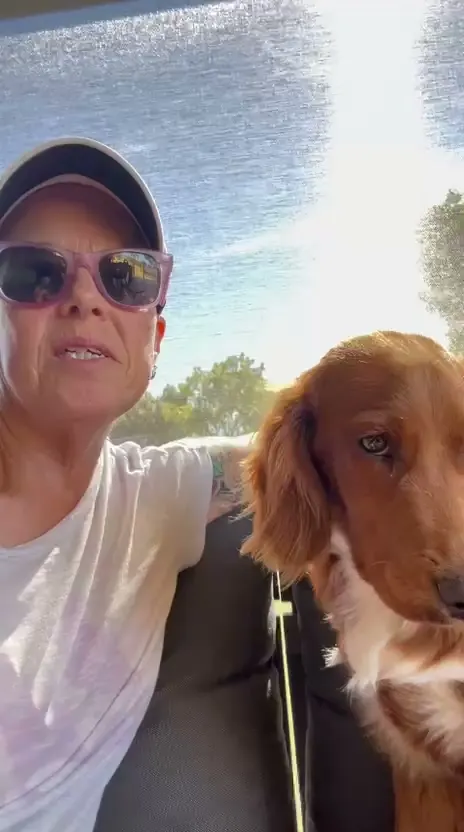
Video#TeamBodhi's story
#TeamBodhi · Annie and Bodhi"I was nervous as anything at the start, however my confidence is growing daily, and Bodhi's confidence grows as my confidence grows."
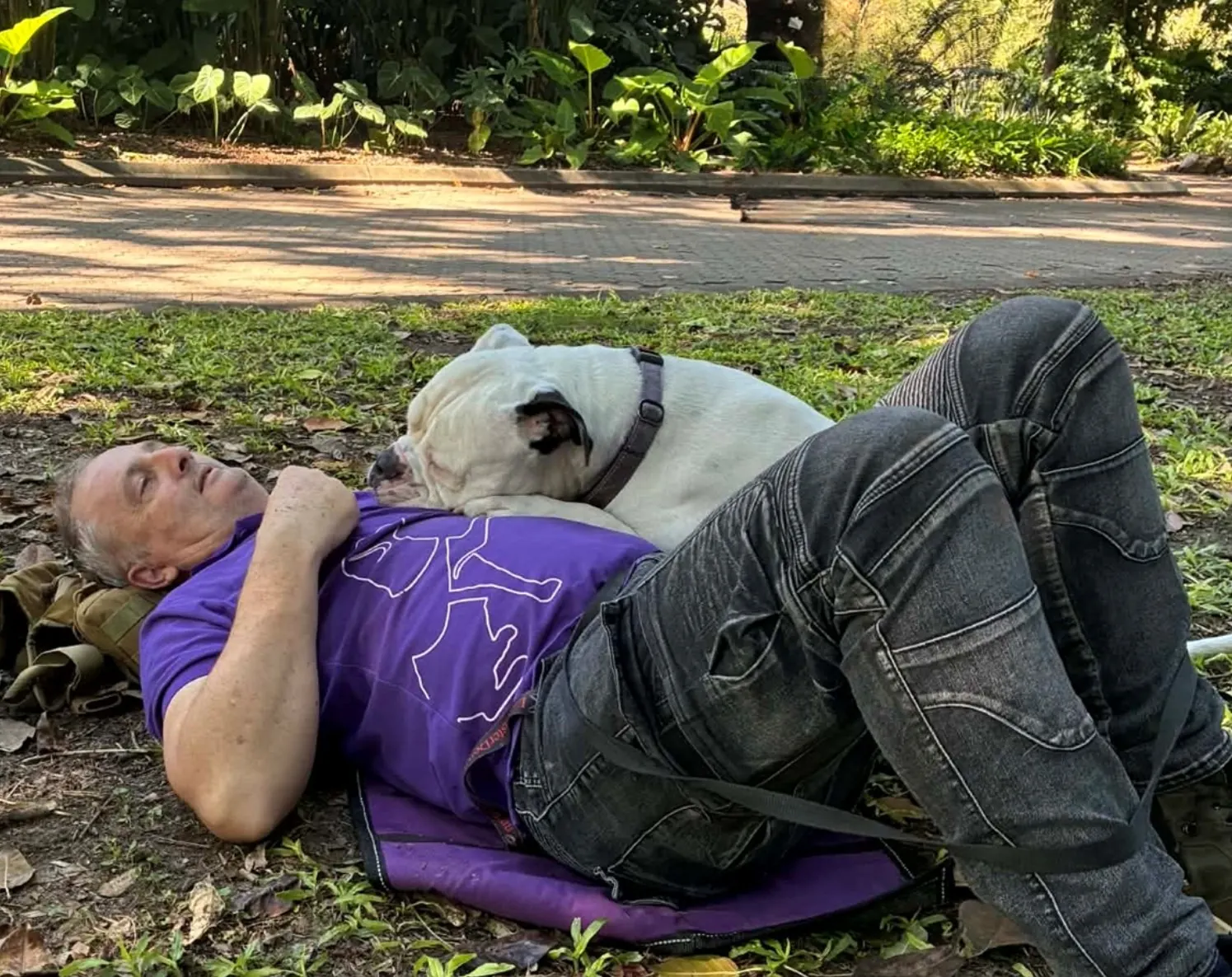
Video#TeamKoa's story
#TeamKoa · Gordon and Koa"I actually go to the shops now more than I've ever done in the past. I'm out and about... It helps me get out, it helps me open up a bit more. Whereas before I would just push people away."
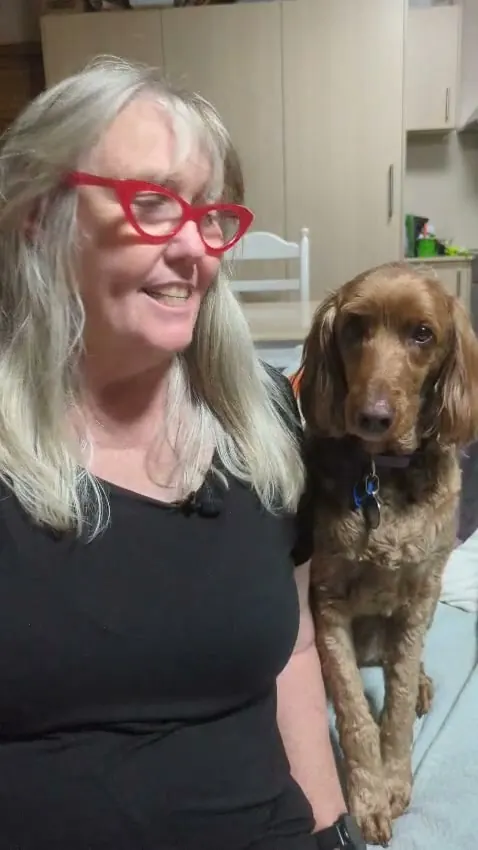
Video#TeamMaisie's story
#TeamMaisie · Grace and Maisie"They really do know dogs and people and the illnesses that we deal with. So give them a go and say hello, and you just never know how much it will change your life."
What this is
PTSD Dogs Australia's Train Your Own program is for people who want to train their own dog for assistance dog work, and do it properly. You train the dog you already love. Our trainers give you the structure, the tools and honest feedback the whole way.
It is not a do-it-yourself course, and it is not a guarantee of certification. It gives you structure, support and assessment over time, so both you and your dog are evaluated honestly and responsibly. Progress is assessed, not assumed.
The goal is GHAD certification: certification under Queensland's Guide, Hearing and Assistance Dogs Act 2009. PTSD Dogs Australia Ltd is an approved training institution of Assistance Dogs under Queensland's Guide, Hearing and Assistance Dogs Act 2009.
Some people start with a dog they already have. Some want help finding a dog. Others are still working out whether their dog, or their timing, is right. That's part of the process.
Training covers foundation skills, real-world behaviour, and personalised assistance tasks where they fit your needs.
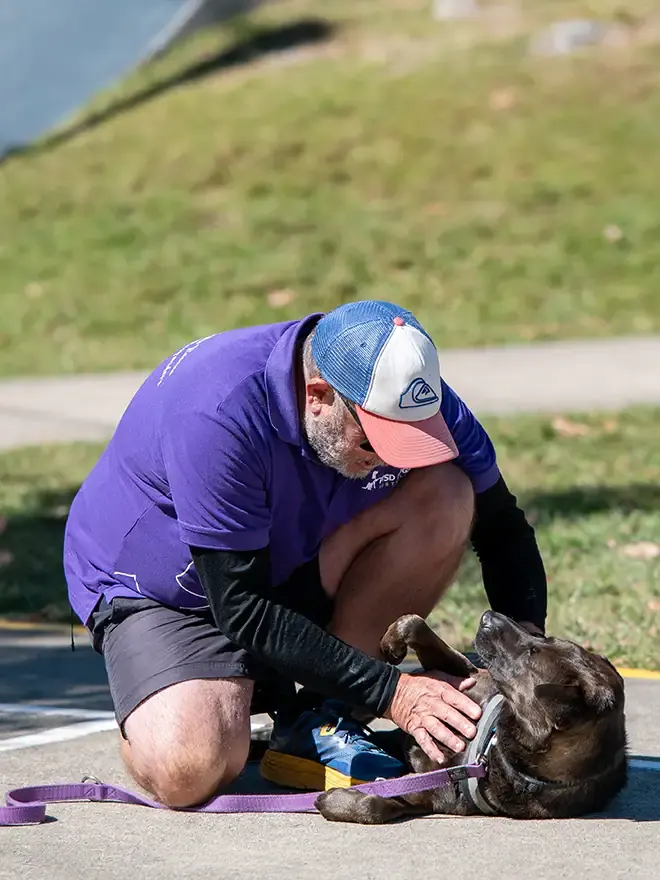
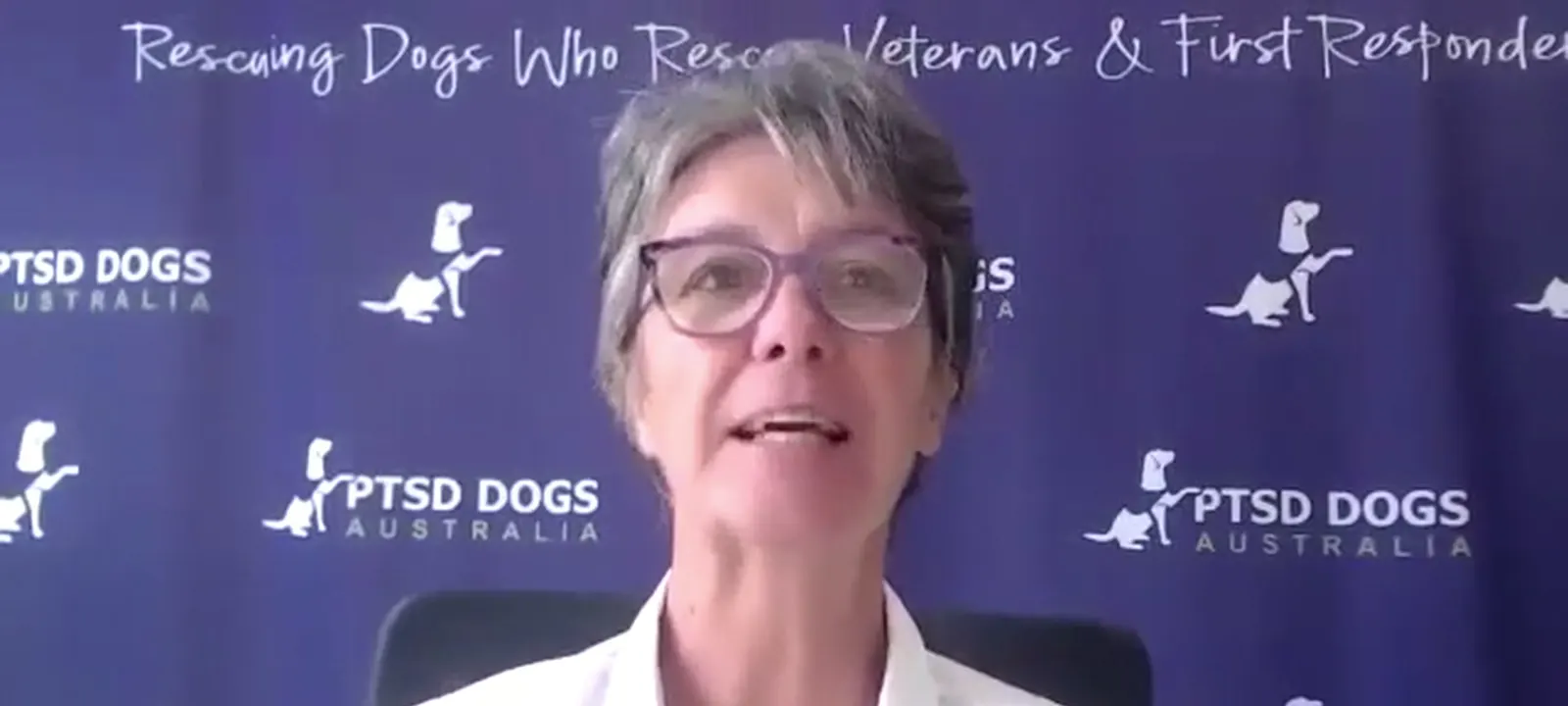
Video · 11 minWatch how the Train Your Own pathway works
Angie Weeks explains the structure, the standards, what is expected of you, and the pathway to GHAD certification.
What an assistance dog can and can't do
For the right person, with the right dog, an assistance dog can give practical, day-to-day support that brings more stability and predictability to life. That might be help with grounding in moments of distress, help getting through public places, or more confidence in routines that feel overwhelming right now.
We don't assume or promise these outcomes. They grow over time, through consistent training, ongoing assessment and the bond between you and your dog. We won't rush you, and we won't overstate what an assistance dog can do. The focus stays on what is right, sustainable and genuinely supportive for you.
An assistance dog is not a treatment. It does not replace clinical or therapeutic support. For some people it becomes part of a wider support plan, alongside existing care, routines and strategies. This program looks at whether training an assistance dog is right for you, and how to do it responsibly when it is. Decisions about treatment and care should always be made with your qualified professionals.
Five quick questions online. It takes about a minute and never asks for medical details.
A Pack member calls you within one business day. You talk about you, your dog and what you'd like help with. It's not a sales call. Sometimes the outcome is a clear next step. Sometimes it's a pause, a different pathway, or more time to think. That's okay.
If it's a fit, you book a two-hour, face-to-face assessment of you and your dog on the Sunshine Coast. Pass it, and you start the online modules with your dog.
Eligibility check, a call with a Pack member, then your two-hour entry assessment on the Sunshine Coast. The Introduction Module sets you up as a handler.
Modules 1 to 3: Respect, Compassion and Teamwork. A one-hour live assessment closes this phase, and you receive a training jacket when the standard is met.
Modules 4 to 6: Resilience and Collaboration. Your dog learns the personalised tasks that help with your disability, in line with your medical goals.
Your final assessment, out in public places with your trainer. Pass, and you are a GHAD certified team, about 12 months from the start for most teams.
A yearly Public Access Test keeps your certification current, with six-monthly welfare checks in between.
Every team is different. Training time depends on your dog's skills and age and on your own training, and can range from 6 months to 2 years. Most teams take about 12 months.
50+ step-by-step training videos for every stage, all created and demonstrated by our senior trainers, Angie Weeks and Jan Honeyman.
Weatherproof cue cards and worksheets with a QR code that links to the video for that skill. Take your training out of the house.
Log your training sessions in the app. Your trainers see how you are going.
Membership gives you live sessions, trainer Q&A and the online community.
A private Facebook group where training videos are shared, so the training team and other handlers can support you.
Train alongside a trainer and other handlers, with your dog, on the Sunshine Coast. See where we train.
You submit training logs and are assessed at the end of each module. You move on when you and your dog are ready.
Ongoing access to the modules and game cards, yearly Public Access Tests, six-monthly welfare checks, and help when your dog retires.
One-on-one training sessions are available at an extra cost.
Sets you up as a handler. You are part of the team, with your own special part to play in your assistance dog's journey.
Foundation behaviours, engagement and appropriate responses. Your dog learns to look to you first.
Calmness, regulation and healthy interaction between you and your dog.
Consistency and the working partnership. Ends with a one-hour live assessment and a training jacket when the standard is met.
Stability and reliability in more complex, real-world places.
Advanced cooperative behaviours, and the start of your personalised tasks.
Refining real-world work, tailored to your medical goals.
Final refinement and your Public Access Test: the formal step to GHAD certification.
Modules 1 to 3 are the Foundation Phase. They build the essential behaviours and working relationship that assistance dog work needs. Modules 4 to 7 are the Advanced Phase. They build resilience, advanced cooperation and readiness for certification. Your hard work brings you and your dog this far. Then it's time to establish your personalised tasks and become a certified team.
Plain requirements, so you know where you stand before you call. We'll help you with anything you're not sure about.
Size matters so your dog can travel safely and easily on public transport and through public places, and do the tasks you need.
| Minimum | Ideal | Maximum | |
|---|---|---|---|
| Height | 350mm | 600mm | 650mm |
| Weight | 6kg | 20 to 30kg | about 40kg |
| Length | 560mm preferred | 1,290mm |
Outside these numbers? Your needs are assessed individually. See the questions below.
The whole picture, before you pick up the phone. PTSD Dogs Australia is a registered not-for-profit organisation.
The entry assessment is two hours, face to face, with qualified trainers on the Sunshine Coast, at our facilities and in a public place such as a shopping centre or parkland. You get live observation and a professional behavioural evaluation, a recording of the session to review, and guidance and next steps, whatever the outcome. You pay when you book, separately from the program. If it is unsuccessful, we offer a second assessment within 6 months, if appropriate, so you have time to work on what we advise.
The program is all seven modules and takes about 12 months, or about 18 months if you start with a puppy. You pay upfront or monthly, at introductory prices until 31 December 2026. The yearly Public Access Test takes about two hours with your trainer and keeps your certification current.
Travel and accommodation for assessments and training are your own cost. If a trainer travels to you, their travel and accommodation is an extra cost.
Asking about NDIS or DVA funding? See the questions below.
Special introductory rates
A two-hour, face-to-face assessment of you and your dog. A second assessment within 6 months is $500.
$1,000one-off
All seven modules, paid in full when you register. The lowest total.
$5,625all 7 modules
All seven modules, paid as 12 monthly payments of $562.50.
$6,750over 12 months
Includes the private Facebook group, unlimited group training and your yearly Public Access Test (PAT). Your first 12 months are included in the program. The yearly membership is then due on your one-year anniversary, whether or not you have finished training.
$997a year
Paid once you pass your first Public Access Test (PAT).
$150one-off
Food, vet care, vaccinations, worming and flea control are your own costs.
about $2,000a year
Bought separately, the full pathway is valued at over $17,000.
Our training headquarters is near Cooroy on the Sunshine Coast, Queensland.
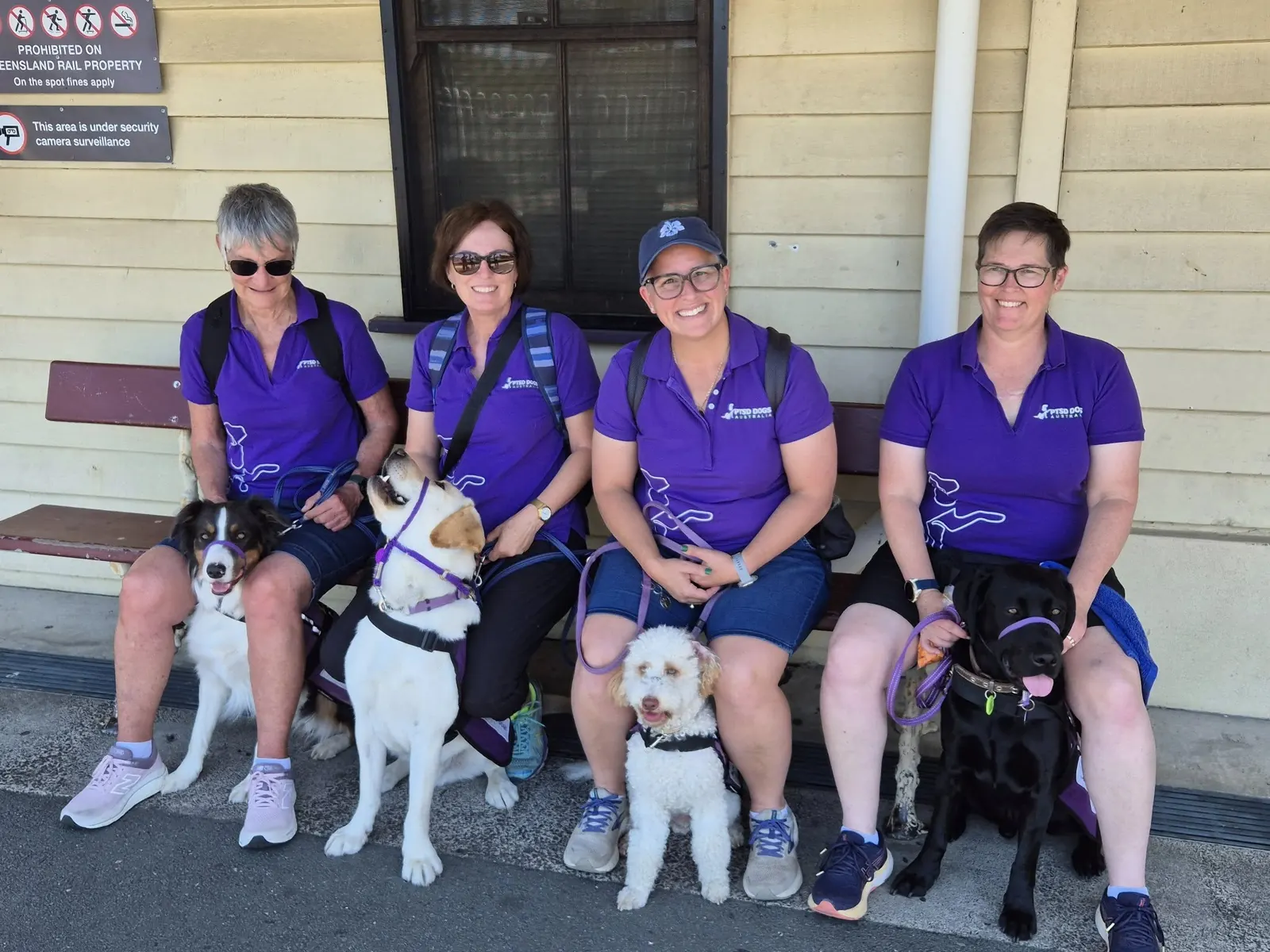
Annie and Bodhi"We live a fair way away from Noosa... the team are at the end of the phone, at the end of an email, all the time for support."
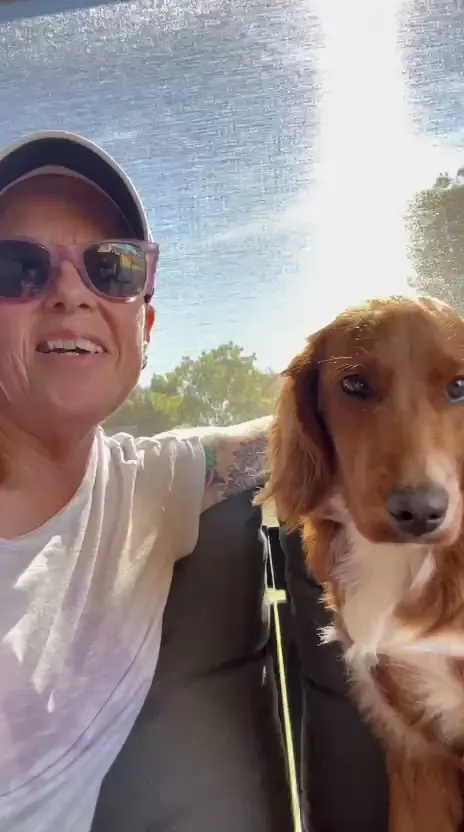
The program is supported by experienced trainers who understand assistance dog standards and the responsibility that comes with this work. They bring real-world experience with people and dogs across many needs, places and stages of readiness.
Their role is not to rush outcomes or force progress. It is to give you guidance, oversight and honest feedback as you move through the pathway, so decisions are made in the best interests of both you and your dog, and training stays ethical, consistent and standards-led. You are not relying on a single opinion or approach. You are supported by a team committed to doing this work properly.
Together, Angie Weeks and Jan Honeyman are a dynamic duo, dedicated to making a difference in the lives of dogs and their handlers. Every video and every piece of content in the program is created and demonstrated by them.
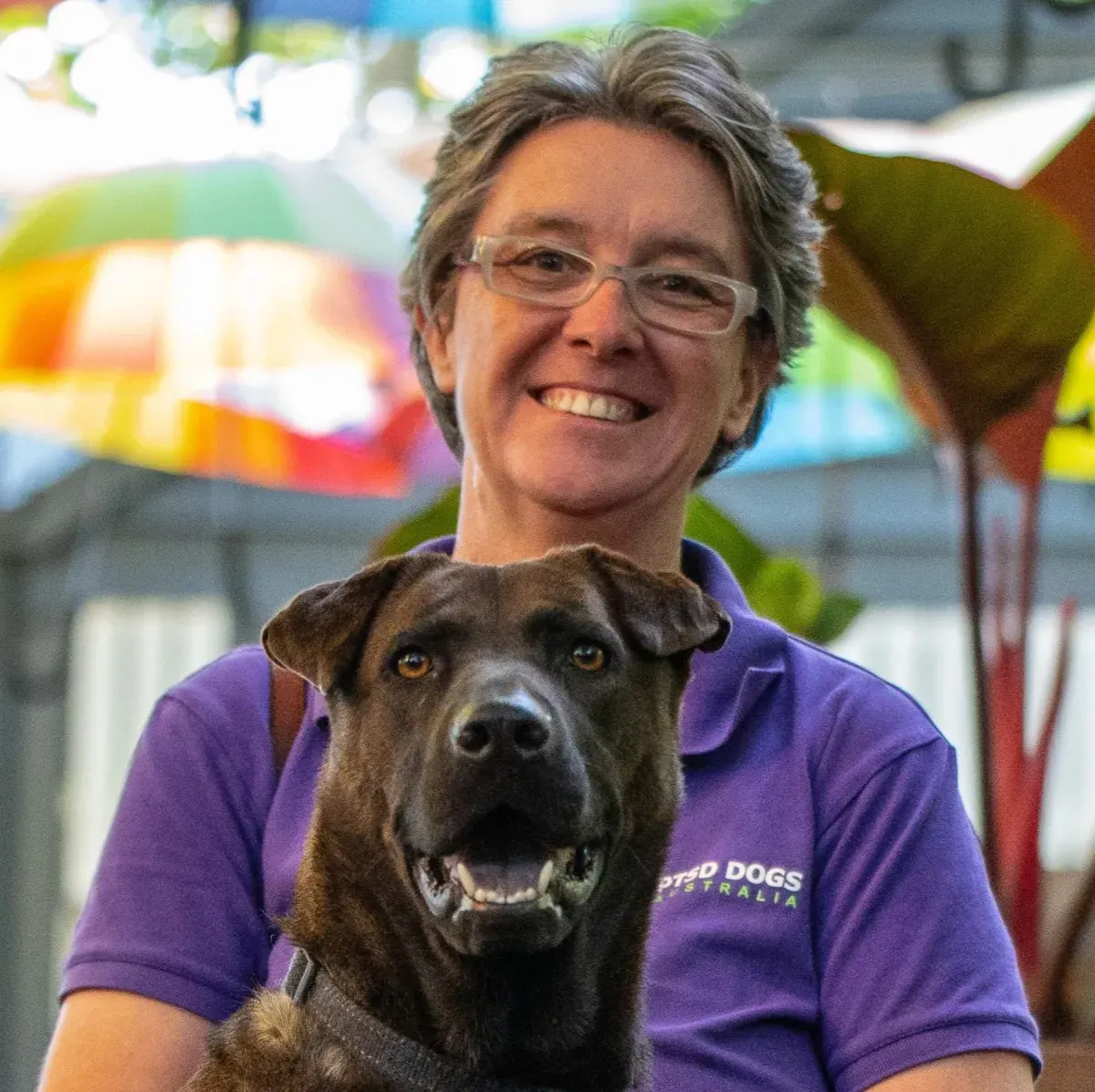
Senior Trainer and CEO. Qualified Dog Behaviourist, NDTF certified since 2019
Angie is a qualified dog behaviourist with an NDTF certification since 2019, and she specialises in PTSD assistance dog training. She has a rare ability to see the potential and drive in every dog and shape it into a life-changing, life-saving PTSD assistance dog.
Her work is not just about training dogs to perform tasks. It is about recognising each dog's natural abilities and drives, and channelling them into skills that help people with PTSD. That takes a deep understanding of dog behaviour and a strong ability to communicate with dogs, especially dogs that have been displaced or are living in shelters. Her expertise lies with shelter and displaced adolescent dogs.
Angie also has a background in counselling and human services, which gives her a deep understanding of the challenges people living with PTSD face. Her passion is to see each dog thrive and find the perfect match in a handler.
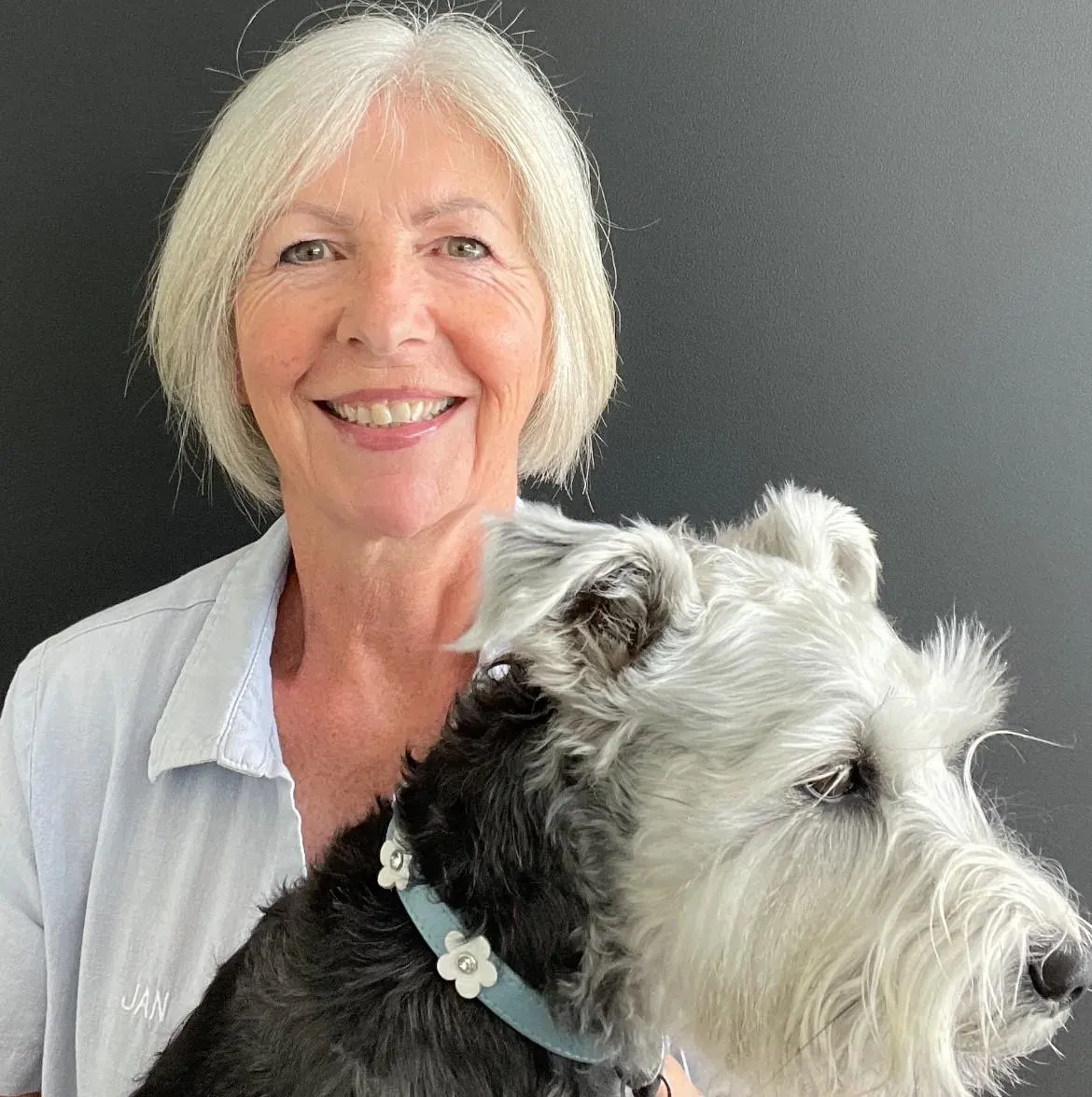
Senior Trainer. Qualified Delta Trainer and Dog Behaviourist since 2020
Jan is a qualified Delta Trainer and dog behaviourist since 2020, and she brings a unique approach to training. Her innovative teaching through games led to the creation of an engaging training program, designed to turn novice dogs into exceptional assistance dogs.
Jan specialises in helping dogs (and their humans!) be the best they can be, working with the dog in front of her to shape their behaviour for the better. An assistance dog really is special. With Angie and Jan working together, your dog gets its chance to shine.
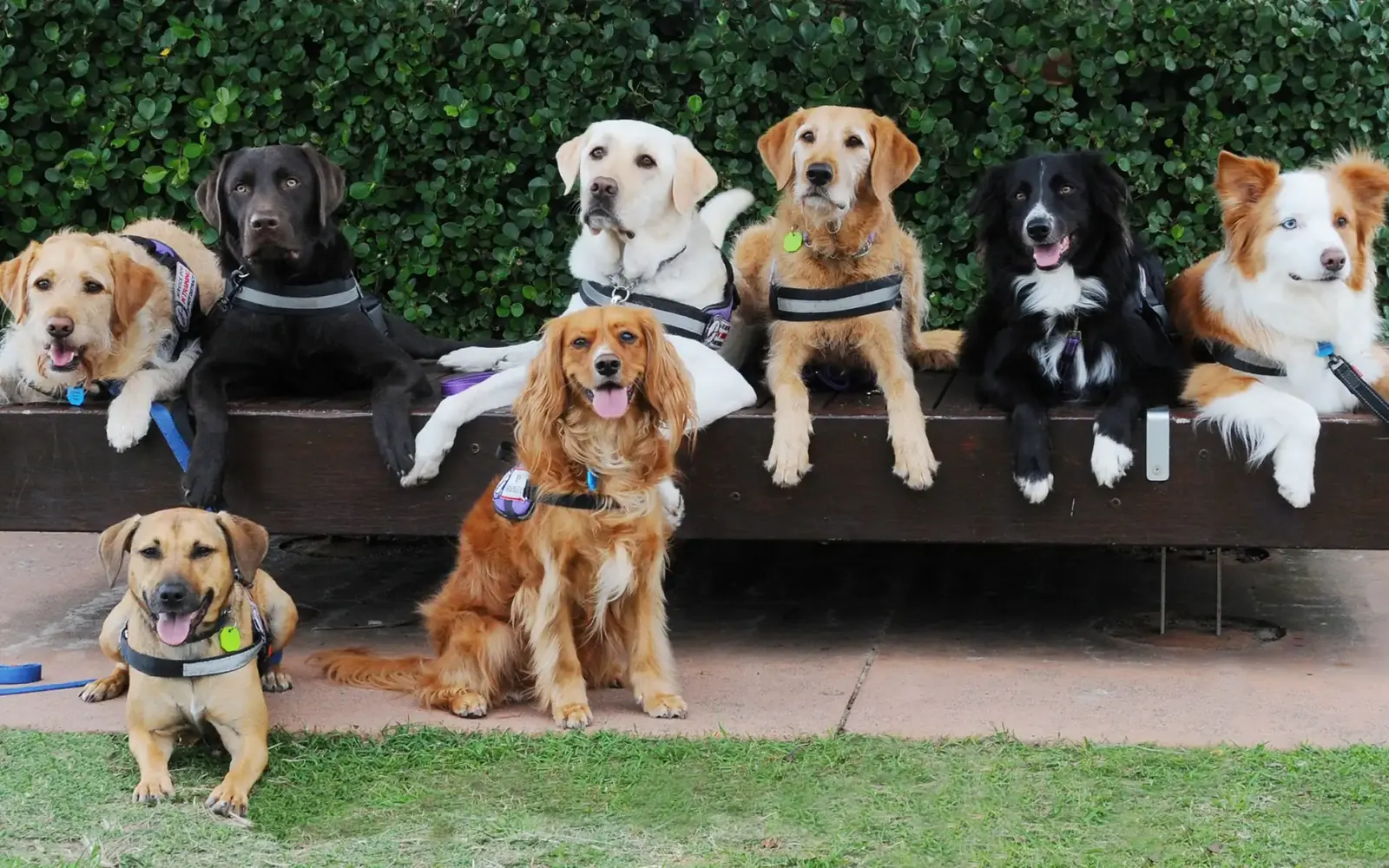
And yes, we're fun and cuddly too.
That happens a lot, and it doesn't mean you or your dog failed. Tell us what happened. We'll look at where you and your dog are now and build from there.
Here's how we work:
Coming from another organisation? You can change to PTSD Dogs Australia, as long as your dog meets our behavioural standards. If your dog is already certified, see Certification.
Read the full Train Your Own terms.
About a minute, five questions. A Pack member calls you within one business day.
Or call us on 07 2141 1168
Train Your Own is for anyone with a clinical diagnosis who wants to train their own dog as their assistance dog. You need a diagnosis of PTSD, depression or anxiety (including social anxiety and agoraphobia), and a psychologist or psychiatrist who supports an assistance dog for you. The program began with veterans and first responders and still serves them, and it's now open to everyone. The eligibility check never asks for medical details.
Yes. In Modules 4 to 7, your dog is taught specific tasks to help with your own disability and meet your medical goals.
No, as long as you can train your own dog, or have suitable people who can support you and possibly act as a second handler. In Modules 4 to 7, your dog is taught specific tasks to help with your physical challenges.
Your dog may qualify if it has the right temperament, health and size. We look for a dog that is cool, calm and collected around people, children and other dogs: a born pacifist, with no aggressive tendencies and a quiet confidence. Your entry assessment tells you honestly whether your dog suits the work. See what you need.
Your dog needs the right temperament and behaviour to work as an assistance animal. Aggression, excessive fearfulness, or being unable to focus on tasks may rule a dog out.
Possibly. We assess every dog case by case, against your needs. Taller dogs suit physical tasks such as balance and weight-bearing work. The upper limits come from what public transport and airlines allow.
Your dog needs to be healthy and physically able to do the tasks you need. A dog with certain medical conditions or physical limits may not be able to do the work.
No. An assistance dog must have a clear bill of health from a vet.
The sooner they start the better, a puppy is never too young to start. The upper age limit depends on size, breed, and existing skills.
Yes, to start. Assistance dogs must be desexed by the time they are ready for the Public Access Test under the GHAD law, which is how your dog will be certified.
Possibly, yes. But an assistance dog is trained for one person, to help with that person's disability, so it can't stay a family pet. Other people at home don't play with or work the dog.
Regularly. Dogs must be well socialised and able to stay calm and focused in many places and situations. Not enough socialisation or training can stop a dog becoming an assistance dog.
Yes. Some people join with a dog they already have, and some want help finding one. Tell us when you check your eligibility and we'll talk through your options. If you'd rather have a dog trained for you, see Get a Dog.
Most teams take about 12 months: seven modules over 52 weeks, then the Public Access Test. Every team is different. It depends on your dog's skills and age and on your own training, and you move on when you're both ready.
Each module sets a weekly training plan you do with your dog at home and out and about, and you log each session in the app. Most teams spend 15 to 20 minutes a day on training. Much of it fits into your everyday routine, which we call NET training: No Extra Time. Expect a little more time when you're practising loose-lead walking or settling activities out and about, but keep these outings to no more than 30 minutes a day. Group training sessions run for one hour.
A $1,000 entry assessment first. After a successful assessment, the program costs $5,625 upfront for all seven modules, or $6,750 paid monthly over 12 months. Membership is $997 a year: Your first 12 months are included in the program. The yearly membership is then due on your one-year anniversary, whether or not you have finished training. Once you pass your first Public Access Test, the GHAD jacket and Handler ID card are $150. Dog care is about $2,000 a year. See the full price breakdown.
You pay by credit or debit card, upfront or in monthly payments. DVA does not currently fund Train Your Own. If you're thinking about NDIS funding, talk to us first. We'll tell you what we know, but we can't promise NDIS funding.
The modules are online, so you can do them from home. You travel to the Sunshine Coast for your in-person assessments, at least three. Travel and accommodation are your own cost. You don't need to live near us. See where we train.
A certified assistance dog has public access rights under Australian law, and can go into most public places wearing the certifying organisation's jacket. The Disability Discrimination Act 1992 (Cth) makes it unlawful to discriminate against a person with a disability because they have an assistance animal. It defines an assistance animal as a dog trained to assist a person with a disability and to meet standards of hygiene and behaviour suited to public places (section 9), and it allows people to ask for evidence of the animal's status and standards (section 54A). In Queensland, certification is under the Guide, Hearing and Assistance Dogs Act 2009. Therapy dogs don't have the same rights.
Yes. That's common, and it doesn't mean you or your dog failed. If you've been with another organisation, you can change to us as long as your dog meets our behavioural standards. Read how we work.
You get guidance and next steps either way. If it's appropriate, we offer a second assessment within 6 months, for $500, so you have time to work on what we advise.
A Pack member calls you within one business day. You talk about you, your dog and your goals. If it's a fit, you book your entry assessment and pay the fee when you book. Pass it, and you register for the modules and start with the Introduction Module.
No pressure and no obligation. Just a clear next step.
If you can't wait, call us on 07 2141 1168.
Need to talk to someone now? Lifeline 13 11 14 · Open Arms 1800 011 046